


 Tiếng Việt
 한국어
한국어 中文 (中国)
 日本語
日本語Cleanrooms have important applications across many industries, where maintaining a clean, contamination-free, and safe environment is essential. Let’s explore with Nam Trung what a cleanroom is and how cleanroom construction is carried out according to proper standards.
1. What Is an Industrial Cleanroom?
An industrial cleanroom is a specially designed space to ensure extremely high cleanliness levels, commonly used in industries such as medical manufacturing, pharmaceuticals, electronics, food production, and biotechnology.
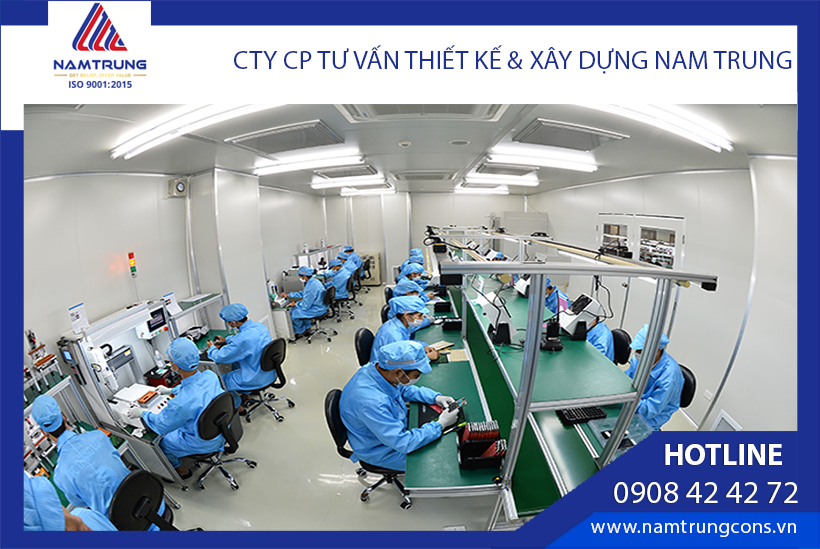
Cleanroom in the electronics industry
The purpose of building a cleanroom is to prevent bacteria, viruses, dust particles, and other contaminants from entering the production space. This is especially critical in medical and pharmaceutical environments, where maintaining a sterile and safe environment is vital.
Industrial cleanrooms are usually equipped with:
- Air filtration systems,
- Special ventilation systems,
- Temperature and humidity control equipment.
Personnel working inside cleanrooms must follow strict personal hygiene rules and wear protective gear such as gowns, masks, gloves, and dedicated uniforms to prevent contamination from human sources.
2. Applications of Cleanrooms in Industry
Pharmaceutical and Medical Production: Cleanroom construction ensures medicines, vaccines, and medical tools are manufactured in contamination-free environments. This prevents impurities from entering the production line and guarantees patient safety.
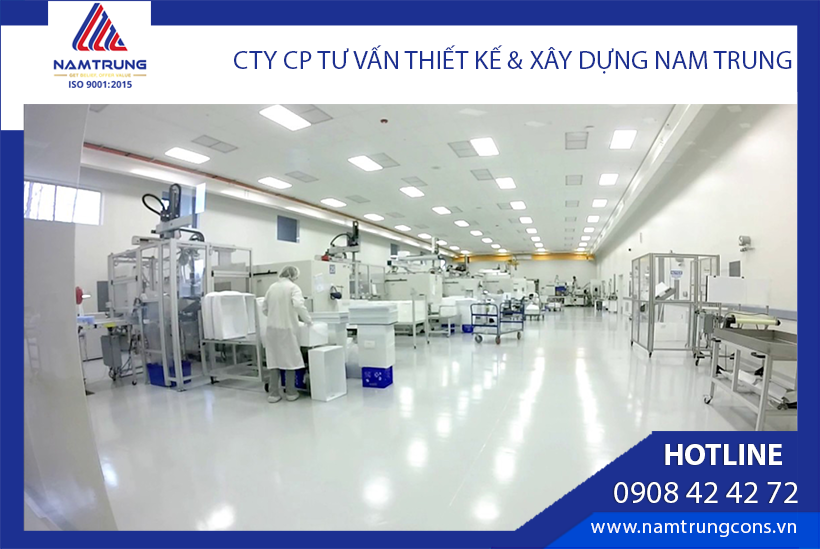
Cleanroom in pharmaceutical manufacturing
- Electronics Manufacturing Technology: In electronics, even a single dust particle can destroy a microchip. Cleanrooms reduce static and airborne particles, keeping production lines safe for delicate sensors and processors.
- Food Technology: Food cleanrooms stop bacteria and foreign matter from entering the processing stages. This is especially important for dairy products, baby food, and long-shelf-life packaged meals, where hygiene directly impacts brand reputation.
- Biotechnology and Medical Research:Here, contamination could compromise years of experiments. Cleanrooms allow scientists to handle living cells, vaccines, and sensitive compounds under sterile, tightly regulated conditions.
- Chip and Electronic Component Manufacturing: A speck of dust invisible to the eye can cause costly defects in semiconductors. To prevent this, chip factories rely on ultra-clean environments with layered ISO class zones, precision airflow, and real-time particle monitoring. This is why cleanroom construction is considered one of the foundations of modern tech.
- Research & Technology Development: R&D cleanrooms are used in nanotechnology, aerospace materials, and next-generation batteries. They help ensure experiments produce reliable data free from contamination.
- Automotive and Consumer Goods Manufacturing: From EV batteries to luxury watches, cleanrooms stop impurities from reducing performance or quality. Some automotive sensors and safety devices would simply not function without these controlled environments.
➡️ These are only some industries where cleanrooms are used. In reality, cleanroom construction is required across many fields to guarantee product safety and production quality.
3. Standard Process for Cleanroom Construction
Building a cleanroom requires careful planning and attention to detail to ensure the space meets all required standards. The key steps are:
- Step 1 – Planning:
- Define the type of cleanroom (e.g., Class 100, Class 1,000).
- Establish specific standards based on industry requirements.
- Step 2 – Design:
- Engage professional contractors to design the cleanroom layout.
- Ensure the design meets airflow, lighting, and anti-static material standards.
- Step 3 – Materials & Equipment Preparation:
- Identify and order required materials and equipment, including anti-static materials, air filtration systems, clean lighting, temperature and humidity control equipment.
- Step 4 – Structural Framework Construction:
- Build the structural frame including walls, ceilings, flooring, and doors.
- Step 5 – Installation of Air Filtration & Ventilation Systems:
- Install professional-grade air filters and ventilation systems to maintain continuous clean and fresh airflow.
- Step 6 – Installation of Clean Lighting:
- Install cleanroom lighting (often UV-C lamps) to eliminate bacteria and viruses.
- Ensure lamps are properly positioned away from walls for even light coverage.
- Step 7 – Quality Inspection & Control:
- Conduct thorough inspections after construction to confirm all cleanliness and safety standards are met.
- Step 8 – Maintenance & Servicing:
- Establish periodic maintenance schedules for air filters and other systems to ensure continuous, efficient operation.
Note: Steps may vary depending on the cleanroom class and project requirements. Clients should work with experienced specialists and contractors to ensure proper construction.
4. Nam Trung Cleanroom Project – Chung Ah Vina, Tay Ninh
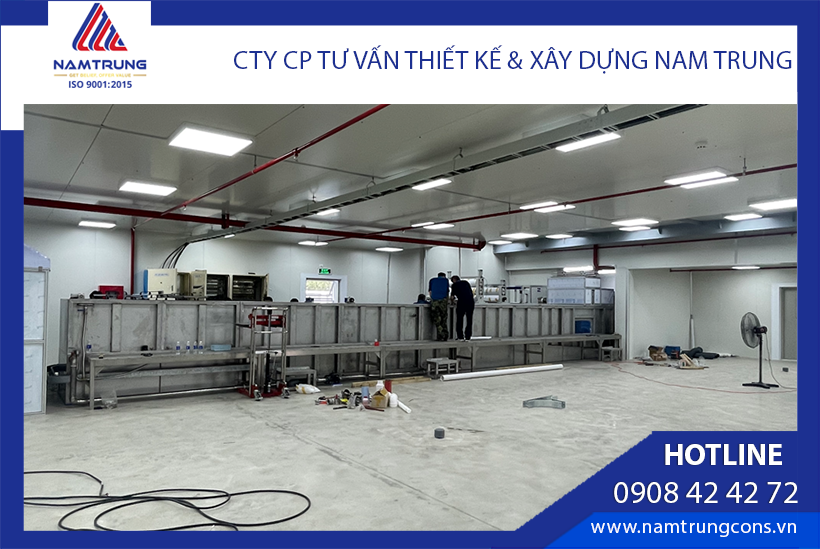
Installation of a drying and treatment line for plastic filter film production.

Water treatment and supply system for the cleanroom.

Overall view of the cleanroom construction area at Chung Ah Vina.
