


 Tiếng Việt
 한국어
한국어 中文 (中国)
 日本語
日本語Steel structure fabrication is a critical stage that ensures the strength and stability of pre-engineered steel buildings. So, what does the fabrication process include?
Steel structures are among the most widely used construction materials, applied in both civil and industrial projects. The fabrication process must comply with strict technical standards and regulations to produce high-quality steel components. When carefully controlled, this process guarantees safe and efficient erection of steel frames on site.
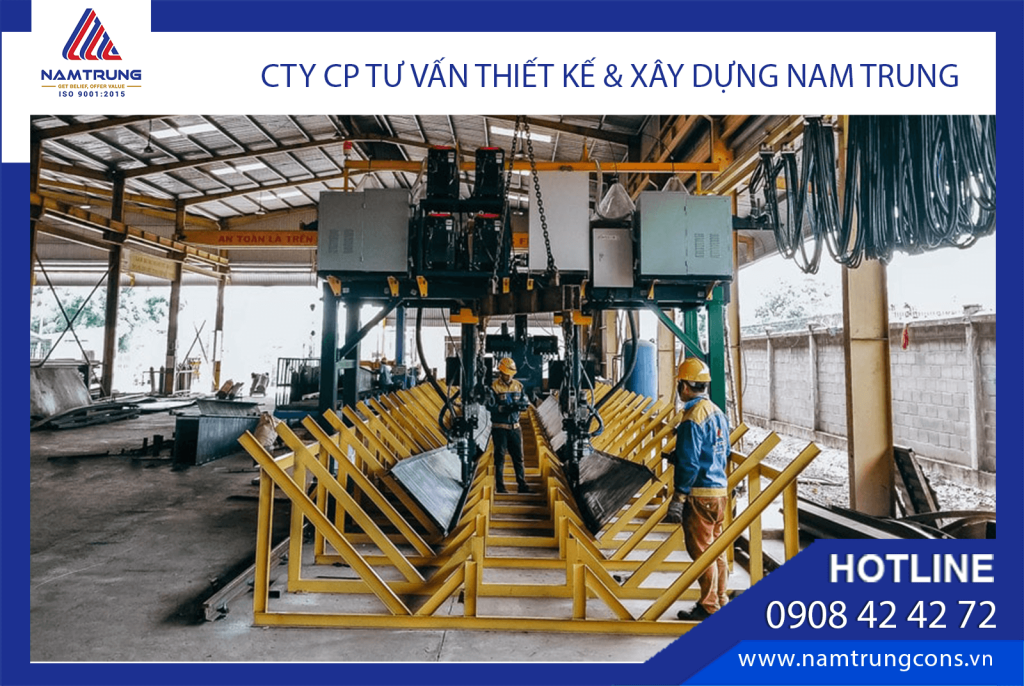
Workers operating a Bruco welding machine at Nam Trung steel factory
Steel Structure Fabrication Process
To ensure the quality and durability of steel structures, fabrication at the factory must follow technical requirements. The standard steel structure fabrication process typically includes the following steps:
Step 1: Inspection of Incoming Materials
All materials delivered to the factory must undergo strict quality checks to ensure safety and compliance with construction requirements. Quality inspection of incoming materials includes:
- Checking quality certificates.
- Comparing specifications with project requirements.
- Verifying compliance with applicable standards.

Steel quality at input is critical
Bước 2: Steel Cutting
Steel plates are cut to the required shapes and sizes according to technical drawings. Steel components are generally classified into two categories:
- Rolled sections: Pre-shaped during manufacturing; cutting only removes excess parts to match the design.
- Built-up sections: Cut from steel plates and fabricated into required shapes. Plates are then assembled into complete structural members.
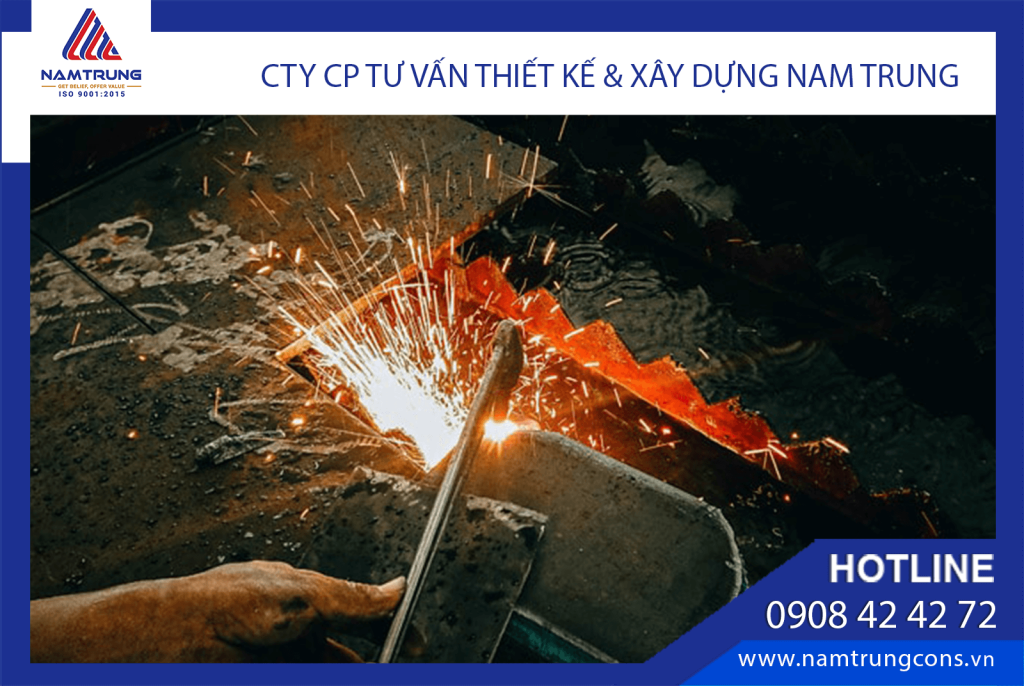
Steel cutting requires highly skilled workers.
Modern cutting technologies used in steel fabrication include automatic laser cutting, CNC plasma and oxy-fuel cutting, slitting machines, shearing machines, disk saws, band saws, and automatic oxy-fuel machines.
Step 3: Assembly & Base Plate Preparation
In steel struction fabrication process, assembly (also called steel lattice or framework) involves arranging beams in parallel with bracing members to form structural networks.
This step includes drilling holes in base plates and using bolts to connect steel members or to join beams with columns. According to the structural design, flanges and webs are positioned and then tack-welded for temporary fixation.
Step 4: Welding Assembly
After positioning and tack welding, components are processed by automatic welding machines. To ensure proper technique and welding quality:
- Welds are first visually inspected.
- Then ultrasonic or magnetic particle testing is performed to check weld quality.
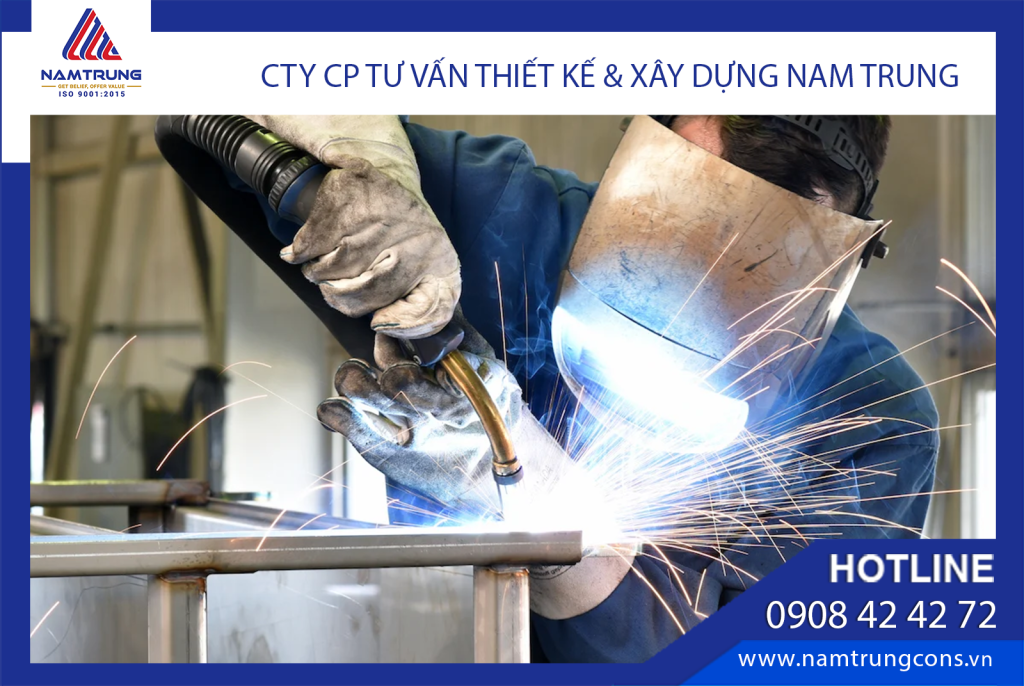
Welding built-up steel requires absolute precision and safety.
Step 5: Straightening Steel Components
High temperatures during welding can cause distortion of steel members. To ensure accuracy during erection, components must be straightened, aligned, and inspected before moving to the next stage.
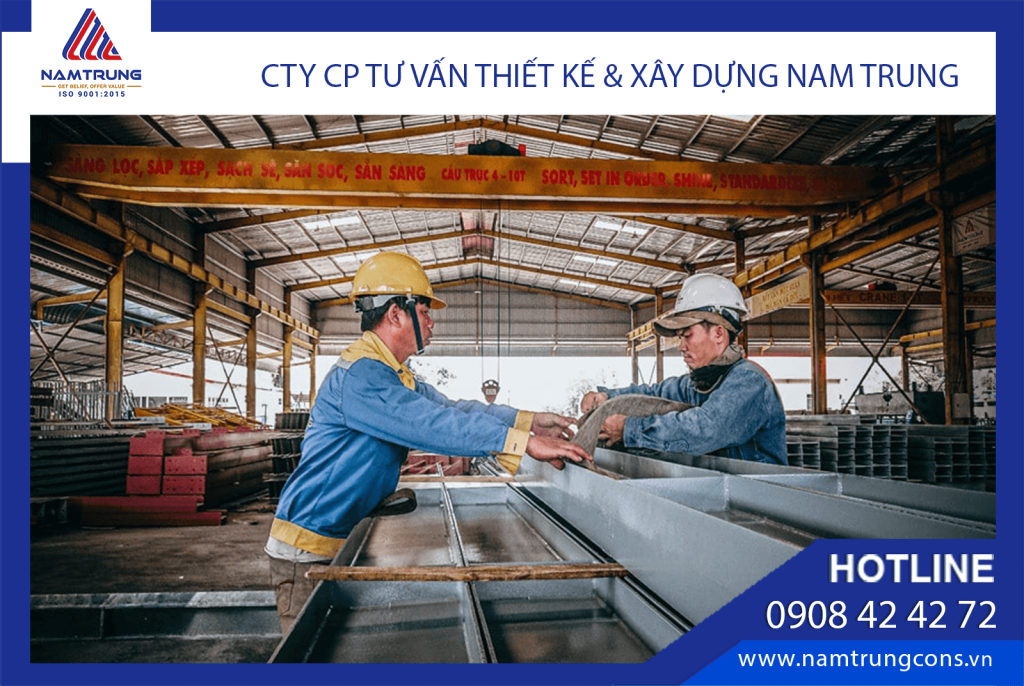
QC department inspects finished steel structures.
Step 6: Welding Base Plates & Stiffeners
Once members are aligned and welded correctly, stiffeners and base plates are installed using welding methods. This stage in the steel structure fabrication process requires highly skilled workers to ensure maximum accuracy.
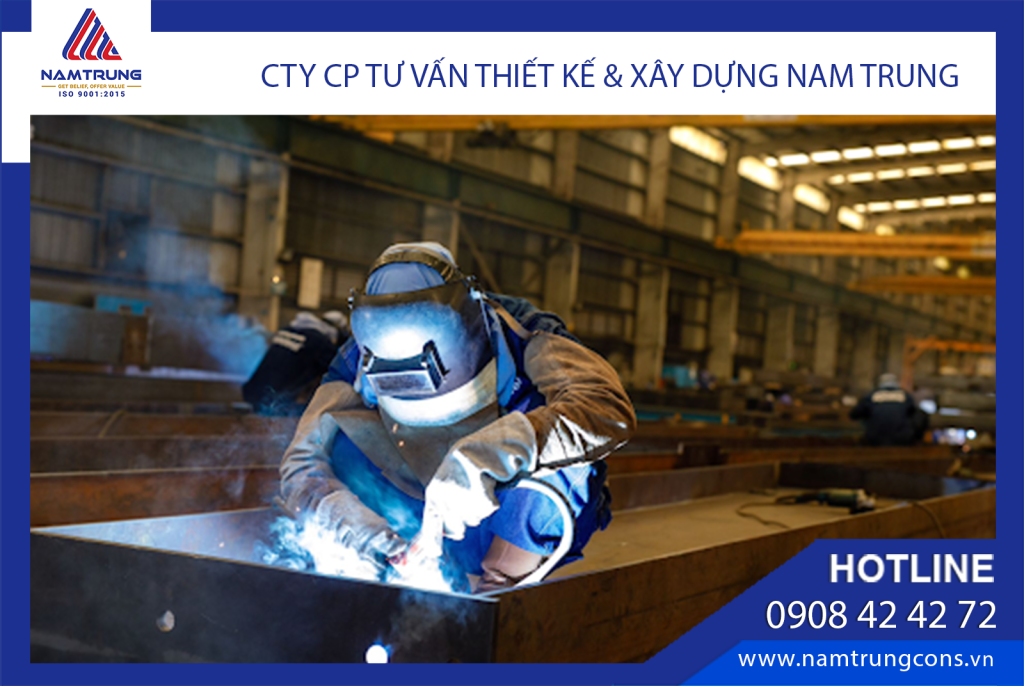
Welding stiffeners and base plates in steel fabrication.
Step 7: Surface Cleaning & Shot Blasting
After fabrication, steel members are surface-treated to remove rust, oil, and other impurities. They are cleaned using mechanical rust removal methods and shot blasting machines before painting and final finishing.
Step 8: Final Coating of Steel Structures
The durability of the components during steel structure fabrication depends heavily on the protective coating that shields them from environmental impacts. Typically, surfaces are coated with one primer layer (anti-rust) and two finishing coats, according to customer requirements.
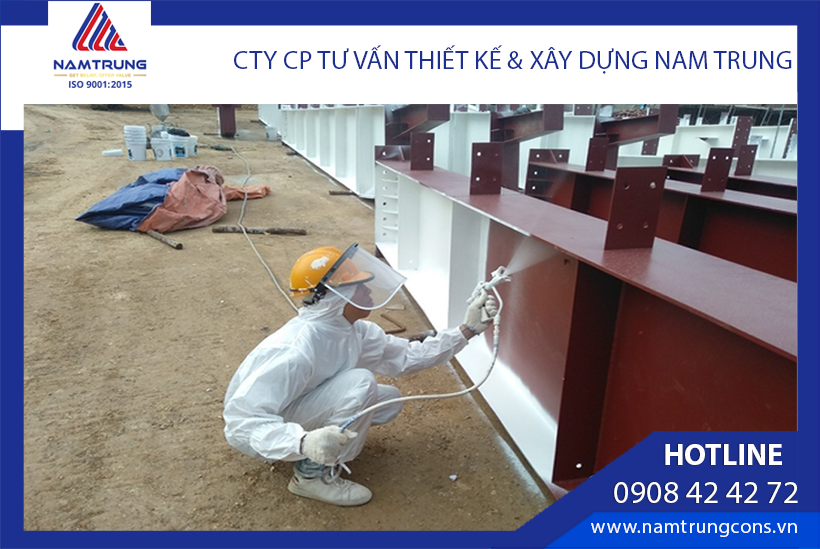
Final coating of steel structures.
Notes on the Steel Structure Fabrication Process
- Raw materials must have clear origin certificates and comply with ASTM standards as well as BS, JIS, and other specifications.
- Machinery must meet standards and maintain high stability to support steel fabrication.
- Engineers and workers must be professionally trained and experienced in steel structure manufacturing.
- QC staff must carefully inspect products to detect and correct errors in time.
The above outlines the standard fabrication process for steel structures. If you are looking for fabrication services, please contact Nam Trung at hotline 0908 42 42 72 – 0908 904 272 for detailed consultation.
