


 Tiếng Việt
 한국어
한국어 中文 (中国)
 日本語
日本語Estimated reading time: 10 minutes

It’s no secret that successful factory construction is the bedrock of industrial growth, but in 2026, navigating its associated costs requires a sophisticated understanding of a dynamic global market. This comprehensive guide will dissect the primary cost factors—from volatile material prices and labor dynamics to advanced design requirements and regulatory trends—empowering investors and engineers to make informed financial decisions for their upcoming industrial projects, with insights from the seasoned experts at Nam Trung Construction.
Key content
- The volatility of structural steel prices driven by raw material costs, energy expenses, and global supply chains.
- The critical impact of skilled labor availability, design complexity, and engineering requirements on the overall budget.
- How international trade policies and tariffs can significantly influence material costs for steel buildings.
- The growing importance of sustainability, green building codes, and long-term economic trends in shaping steel building investments.
- The advantage of partnering with an expert EPC contractor for integrated project delivery and cost certainty.
Key Material and Market Factors in Modern Factory Construction
The skeleton of any industrial facility is its structural system, and for modern factory construction, that most often means steel. The cost of these materials is not a fixed figure; it is a complex equation influenced by global and local economic forces. A proactive approach to these factors is what separates a budget-conscious project from one plagued by overruns.

The Volatility of Structural Steel and Input Material Prices
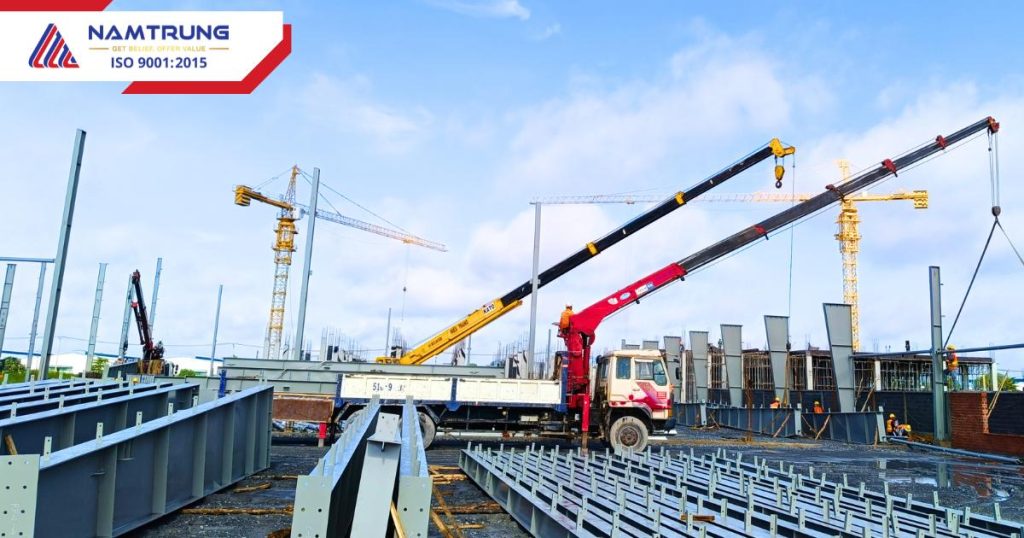
At the heart of every steel structure project lies the cost of structural steel itself. This commodity is subject to intense price volatility driven by several key inputs:
- Raw Material Costs: The prices of iron ore, coking coal, and ferrous scrap directly dictate the production cost of new steel. Geopolitical events, trade policies, and mining output in countries like Australia and Brazil create ripple effects felt on construction sites in Vietnam and across Southeast Asia.
- Energy and Production Expenses: Steel manufacturing is an energy-intensive process. Fluctuations in the cost of electricity and natural gas can significantly impact mill operating costs, which are then passed down the supply chain to steel structure fabrication companies and end clients.
- Global Supply and Demand: The post-pandemic industrial boom, infrastructure investments worldwide, and the rapid development of markets like India and Southeast Asia create sustained demand. When demand outpaces supply, prices for pre-engineered steel building components inevitably rise.
For an investor, this volatility underscores the need for a contractor with strong procurement leverage and market foresight. At Nam Trung Construction, our EPC model allows us to lock in material prices early in the process, providing our clients with greater budget certainty amidst a turbulent market.

The Impact of Tariffs and International Trade Policies
In an interconnected global economy, trade policies are a significant factor in the final cost of steel buildings. Tariffs, anti-dumping duties, and import quotas on steel can create artificial scarcity and increase domestic prices. A savvy project team must stay abreast of these policies, as sourcing decisions can have a multi-million dollar impact on a large-scale factory construction budget. Navigating this complex web requires a partner with international experience and a robust network of certified suppliers, ensuring compliance and cost-effectiveness without compromising on the quality of materials.
Labor, Design, and Engineering: The Human and Technical Cost Factors
While materials form the physical building, the cost of bringing the design to life is equally critical. This encompasses the expertise of the people involved and the complexity of the design itself. These elements are central to the planning of any factory construction project and can greatly influence both initial outlay and long-term operational efficiency.
Skilled Labor Availability and Total Project Labor Costs
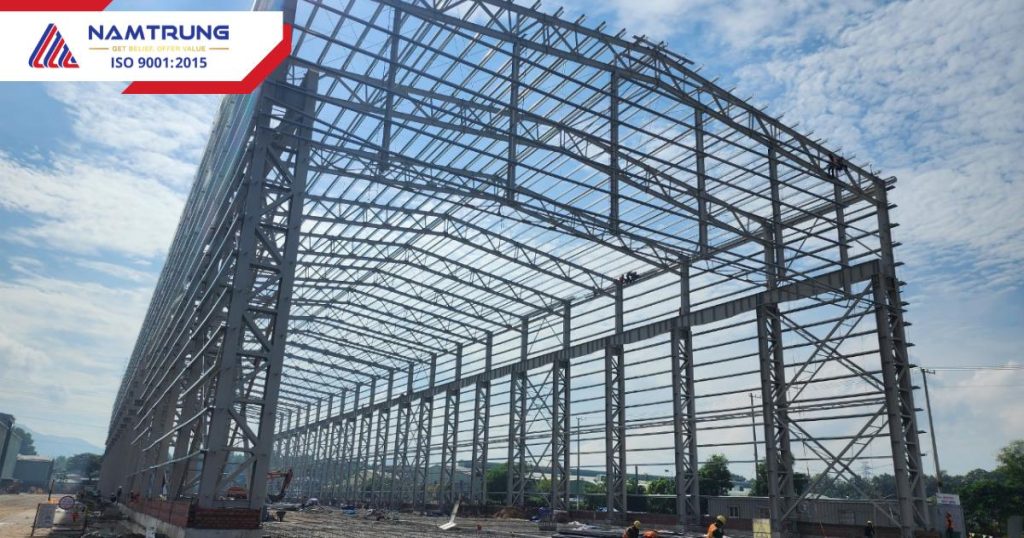
A pre-engineered steel building for factory construction is only as strong as the team that erects it. The cost and availability of skilled labor—including welders, steel erectors, crane operators, and project managers—represent a substantial portion of the overall budget. Key considerations include:
- Regional Wage Variations: Labor costs can vary significantly between different provinces and countries within Southeast Asia.
- Skill Shortages: A high demand for specialized construction talent can drive up wages and project timelines.
- Safety and Certification: A highly trained workforce that adheres to international safety standards (like OSHA) may command higher wages, but this investment mitigates the immense costs associated with worksite accidents and delays.
Choosing an EPC contractor for factory construction with a stable, skilled, and certified in-house workforce, like Nam Trung Construction, provides a distinct advantage. It ensures consistent quality, reduces the risk of delays due to labor shortages, and simplifies project management.
How Design Complexity and Engineering Requirements Influence Budget
The architectural and engineering design phase is where significant value can be added and costs can be most effectively optimized. The choices made here are a fundamental factor in determining the final price of your steel structure project.
- Building Dimensions and Clear-Span Needs: A facility requiring a vast, column-free interior for manufacturing equipment will necessitate more sophisticated and potentially more expensive structural steel framing systems compared to a building that can accommodate interior columns.
- Seismic and Wind Load Considerations: In regions prone to earthquakes or typhoons, like parts of Vietnam, the engineering design must account for higher lateral loads. This results in more robust connections, potentially heavier members, and increased material and engineering costs—a non-negotiable investment for asset protection and personnel safety.
- Integration of Specialized Systems: Modern factory construction often involves complex utility integrations, heavy-duty crane systems, specialized ventilation, and stringent fire suppression systems. Each of these requirements adds layers of complexity to both the design and the installation phases.
Our engineering team at Nam Trung Construction excels at value engineering—the process of optimizing the design to achieve the required performance and safety standards at the lowest possible life-cycle cost, without sacrificing quality or functionality.
External and Long-Term Factors Shaping Steel Building Investments
Looking beyond the immediate project site, broader economic and societal trends are shaping the cost and approach to industrial factory construction. These external forces are becoming increasingly important in financial modeling and strategic planning.
The Growing Influence of Sustainability and Green Building Codes
Sustainability is no longer a niche concern but a mainstream business imperative. Green building certifications and evolving energy codes are becoming a significant factor in factory construction. While implementing sustainable features may involve a higher initial investment, they offer substantial long-term savings and regulatory compliance.
- Energy-Efficient Cladding and Insulation: High-performance insulated wall and roof panels reduce heating and cooling costs over the building’s lifespan.
- Solar Readiness and Renewable Integration: Designing the steel structure to support future solar panel installations is a forward-thinking cost-saving measure.
- Sustainable Material Sourcing: Using steel with a high recycled content and ensuring responsible sourcing can enhance a company’s brand and meet the requirements of certain certifications or clients.

As a leader in modern construction, Nam Trung Construction integrates sustainable principles into our EPC services, helping clients future-proof their assets and reduce their operational carbon footprint.
Market Trends and the Economic Outlook for 2026
The overall health of the global and regional economy plays a pivotal role in factory construction costs. Key trends to watch in 2026 include:
- Inflation and Interest Rates: The cost of capital is a critical component. Higher interest rates can increase the cost of factory construction loans, affecting the overall project feasibility for investors.
- Supply Chain Resilience: The lessons learned from recent global disruptions have led to a greater emphasis on building resilient, and sometimes redundant, supply chains. This may involve strategic stockpiling or multi-sourcing, which can impact procurement strategies and costs.
- Technological Adoption: The increasing use of Building Information Modeling (BIM) and other digital tools, while requiring an upfront investment, leads to fewer errors, less rework, and more efficient factory construction sequencing, ultimately saving time and money.
Conclusion: Strategic Planning is Key to Cost-Effective Factory Construction
In conclusion, a successful factory construction project in 2026 demands a holistic and strategic view of a complex matrix of cost factors. From the foundational prices of structural steel and the nuances of skilled labor to the critical impact of sophisticated engineering and global market trends, every element interplays to define your project’s budget and timeline. The most effective way to navigate this complexity is by partnering with an experienced EPC contractor who can provide integrated oversight from concept to completion.
By understanding these dynamics, investors and project owners can move forward with confidence, making data-driven decisions that optimize their investment. Ready to build with confidence and clarity? Contact the experts at Nam Trung Construction today for a detailed consultation and let us help you engineer a cost-effective and successful future for your industrial facility.
NAM TRUNG DESIGN & CONSTRUCTION CONSULTING JOINT STOCK COMPANY
A leading EPC contractor for civil, industrial, commercial, and infrastructure projects in Southeast Vietnam.
🏠 119 Le Loi, Phu My Ward, Ho Chi Minh City
☎ (+84) 908 90 42 72 / (+84) 908 42 42 72
✉ sales@namtrungcons.com 🌐 namtrungcons.vn / namtrungcons.com

Frequently Asked Questions (FAQ)
What is a pre-engineered steel building (PESB) for factory construction?
A pre-engineered steel building is a structure fabricated from standardized steel components designed and manufactured to fit a specific project. This method allows for faster construction, cost savings, and design flexibility compared to traditional construction.
What are the main advantages of using steel structures for factory construction?
Steel structures offer durability, speed of construction, design flexibility for large clear-span spaces, cost-effectiveness, and are sustainable due to steel’s recyclability.
What does EPC stand for and why is it beneficial?
EPC stands for Engineering, Procurement, and Construction. This project delivery method provides a single point of responsibility, ensuring better cost control, streamlined communication, and reduced risks for the client.
How does Nam Trung Construction ensure cost certainty in a volatile market?
Through our EPC model and strong supplier relationships, we leverage procurement strategies to lock in material prices early, providing clients with greater budget certainty and protecting them from market fluctuations.
What factors influence the cost of steel structure fabrication?
Key factors include the complexity of the design, the quality and type of steel used, project location, labor costs, and any additional requirements for specialized coatings or treatments.
