


 Tiếng Việt
 한국어
한국어 中文 (中国)
 日本語
日本語Currently, businesses and investors, when implementing production plant projects, increasingly prioritize industrial factories with steel structures instead of traditional reinforced concrete construction. This preference comes from outstanding advantages such as high durability, fast construction, and cost optimization. So, what exactly is an industrial factory? Let’s explore with Nam Trung through this article and review the most common types of industrial steel-structure factories today.
1. What is an Industrial Factory?
An industrial factory is a facility designed and built to serve production, processing, storage, or fabrication activities in the industrial sector. Typical areas include:
- Production area: Where goods are processed, assembled, or manufactured.
- Material and product storage: For storing raw materials and finished goods.
- Office area: For management, operations, and administrative tasks.
- Maintenance and repair area: For maintaining and repairing machinery and equipment.
- Safety and security area: To ensure labor safety and protect assets.
Industrial factories can be designed in many ways depending on the type of production and industry requirements. Factors such as size, structure, and equipment vary accordingly.
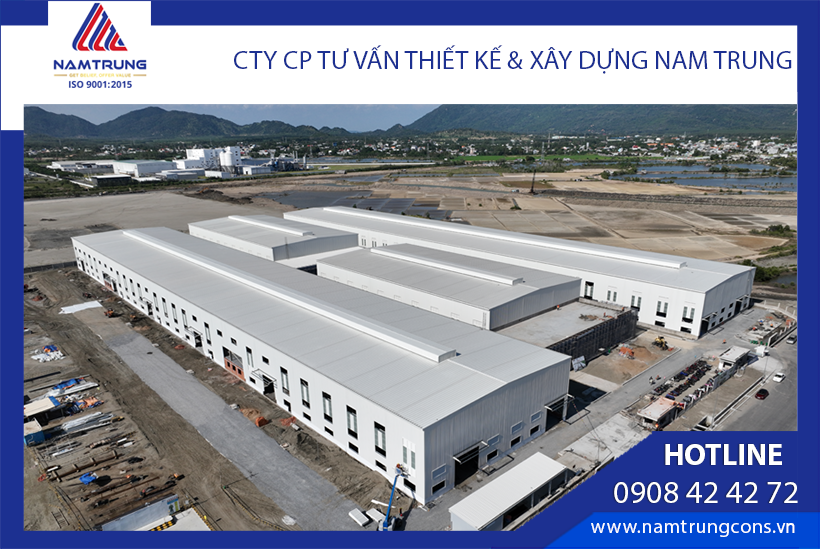
Industrial factory for crane & lifting equipment manufacturing – Mi-Jack (Fabricated & Erected by Nam Trung)
2. Components of a Steel-Structure Industrial Factory
A steel-structure industrial factory uses steel as the primary material for the building frame. Steel structures provide many benefits, including high load-bearing capacity, flexibility in design and construction, and quick installation. Below are the main components of steel-structure industrial factory:
Structural Frame
- Steel columns: Main load-bearing columns, typically H-shaped or I-shaped, transferring roof and frame loads to the foundation.
- Steel beams: Horizontal members, usually I-shaped or H-shaped, distributing loads from the roof to the columns and from columns to the foundation.
- Purlins and bracing: Purlins (C- or Z-shaped) support the roof, while bracing connects columns and beams for added stability and strength.
Roof
- Steel roof frame: Made from I-beams, H-beams, or steel tubes to support roofing sheets.
- Roofing sheets: Options include galvanized steel, composite sheets, or insulated waterproof materials. Roofs are usually sloped for drainage and reduced load.
Walls and Partitions
- Panel walls: Insulated or galvanized steel panels for enclosure, providing thermal insulation and waterproofing.
- Masonry walls: In certain areas requiring higher durability and load capacity, brick or concrete walls may be used.
Flooring
- Concrete floor: Cast over steel beams, supporting loads from production and storage activities.
- Steel flooring: Steel grating or reinforced steel sheets for areas requiring extra strength.
Cranes and Hoists
- Overhead cranes/hoists: Installed on steel beams to lift and move goods.
- Crane rails: Attached to beams to allow crane movement.
Ventilation and Lighting Systems
- Ventilation: Includes industrial fans, vents, and dust extraction systems to maintain a safe, comfortable environment.
- Lighting: Equipped with industrial lighting systems to ensure adequate visibility and workplace safety.
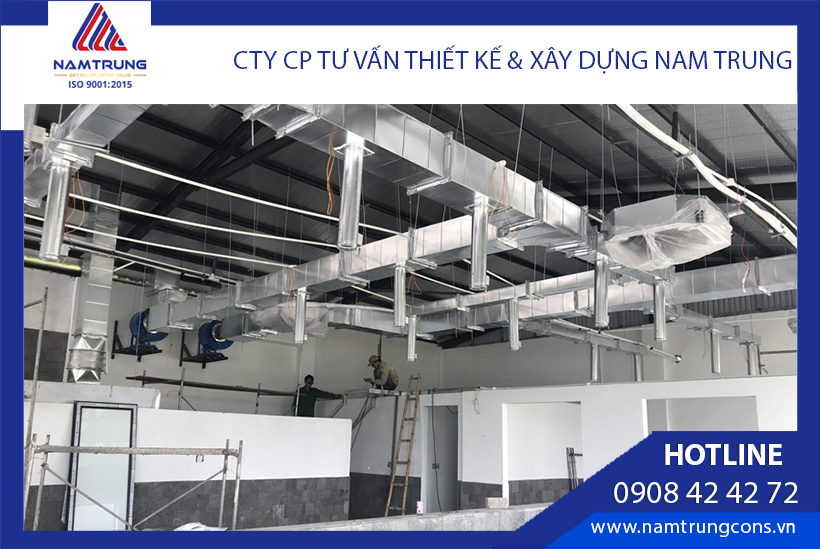
Ventilation system inside an industrial factory
Doors and Windows
- Rolling or automatic doors: For main entrances and storage access.
- Windows and vents: Provide natural light and air circulation.
Safety and Security Systems
- Railings and barriers: Installed in high or hazardous areas for safety.
- Fire protection systems: Fire extinguishers, sprinklers, and alarm systems.
Foundation
Concrete foundation: Designed to support the entire structure, distributing loads from the steel frame into the ground.
Steel-structure factories are designed for excellent load-bearing, flexible design, and ease of erection—helping reduce construction time and costs.
3. Why Industrial Factories Are Preferred
High load-bearing capacity
Industrial factories, especially those built with steel structures, have great load-bearing strength and distribute loads evenly. This makes it possible to construct large-scale factories with open spaces without the need for many supporting columns, creating favorable conditions for production and storage activities.
Flexibility in design
Industrial factories can be designed and expanded easily to meet the changing needs of businesses. Steel structures allow modifications and expansions without dismantling the entire structure.
Fast construction time
Industrial factories can be built quickly thanks to the use of pre-fabricated materials such as steel sections, insulated panels, and roofing sheets. The rapid assembly of structural components helps shorten construction time compared to traditional concrete buildings.

Erection of a steel-structure industrial factory – optimizing construction schedule
Reasonable construction cost
Steel structures and modern materials such as insulated panels help save on construction costs. Steel can be mass-produced and quickly assembled, reducing the total cost of the project.
Durability and low maintenance
Steel-structure industrial factories have long lifespans and require less maintenance than structures built with traditional materials such as brick or concrete. Steel is resistant to weather factors and is less affected by environmental changes.
Good thermal and sound insulation
Modern insulated panels and roofing sheets help maintain stable indoor temperatures and reduce noise from outside. This creates a comfortable working environment while also saving energy.
Fire resistance
Many industrial factory systems are equipped with fire-prevention measures such as fireproof coatings for steel frames, sprinkler systems, and fire alarm devices, ensuring safety for workers and assets.
High security
Industrial factories can be equipped with advanced security systems including roller doors, surveillance cameras, and alarms, effectively protecting assets and goods.
Aesthetic and modern design
Steel-structure industrial factories feature modern and aesthetic designs that align with contemporary construction standards and trends. This not only creates a good working environment but also enhances the image of the business.
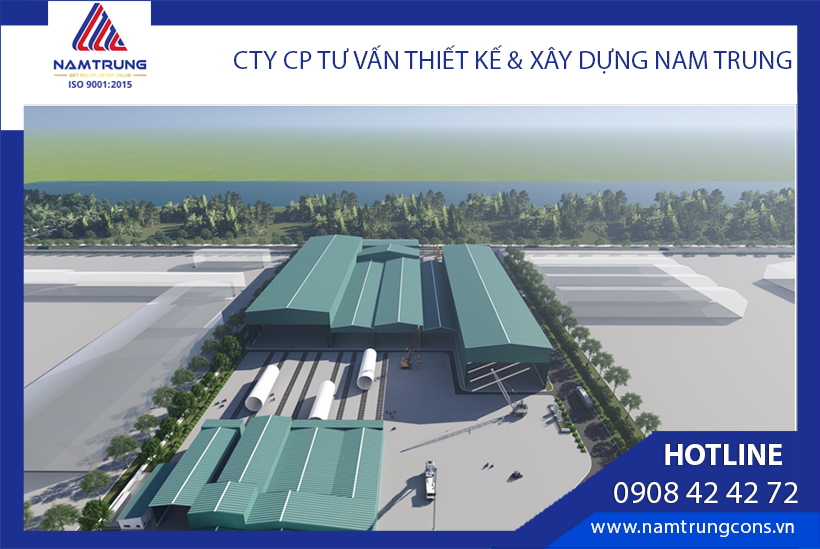
Rendering of CSWind wind tower manufacturing factory
Easy transportation and installation
Components such as steel frames, panels, and roofing are usually pre-fabricated and easy to transport to the construction site for installation. This minimizes issues related to logistics and assembly.
Thanks to these advantages, industrial factories have become the popular choice for businesses in many industries, ranging from manufacturing and processing to warehousing and distribution.
4. Popular Types of Steel-Structure Industrial Factories Today
Single-story industrial factory:
- Steel frame with metal or insulated roofing sheets.
- Spacious, suitable for light industries and warehouses.
- Easily expandable.
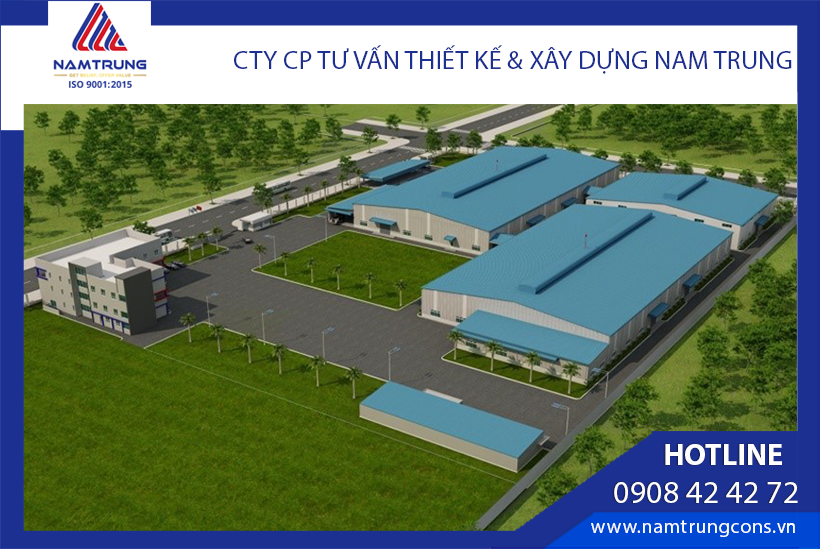
Rendering of 1-story industrial factory – Dongbo Chain Vina
Multi-story industrial factory:
- Strong steel structures suitable for large-scale production facilities.
- Equipped with elevators and safe stair systems.
- Optimizes space utilization by building vertically.

Multi-story industrial factory with steel structure
Industrial factory with cranes:
- Designed with overhead cranes for lifting heavy goods.
- Ideal for heavy industries like machinery and mechanical engineering.

Nam Trung steel-structure factory with 1–10 ton overhead cranes
Arch-frame industrial factory:
- Arched steel structures create open spaces without center columns.
- Suitable for large warehouses or production requiring unobstructed space.
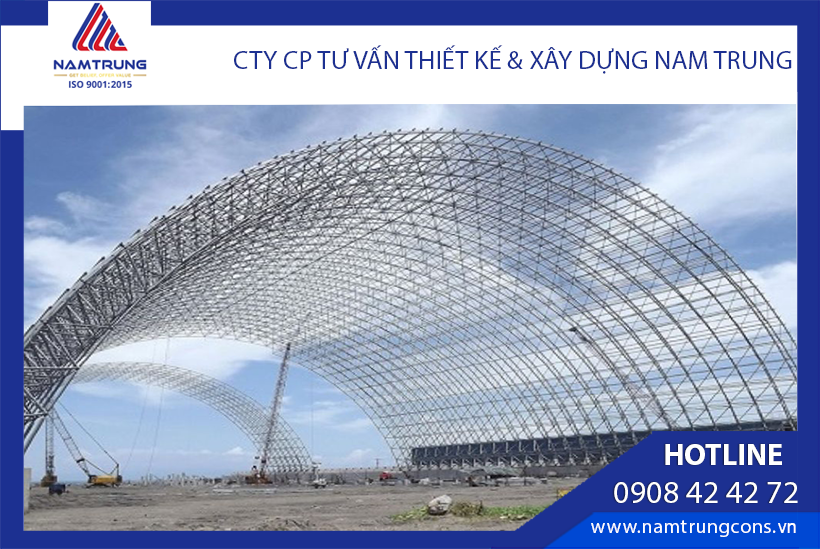
Arch-frame steel-structure industrial factory
Industrial factory with office integration:
- Combines production space with office areas.
- Modern design with maximum natural lighting.
- Equipped with insulation and soundproofing for a comfortable working environment.
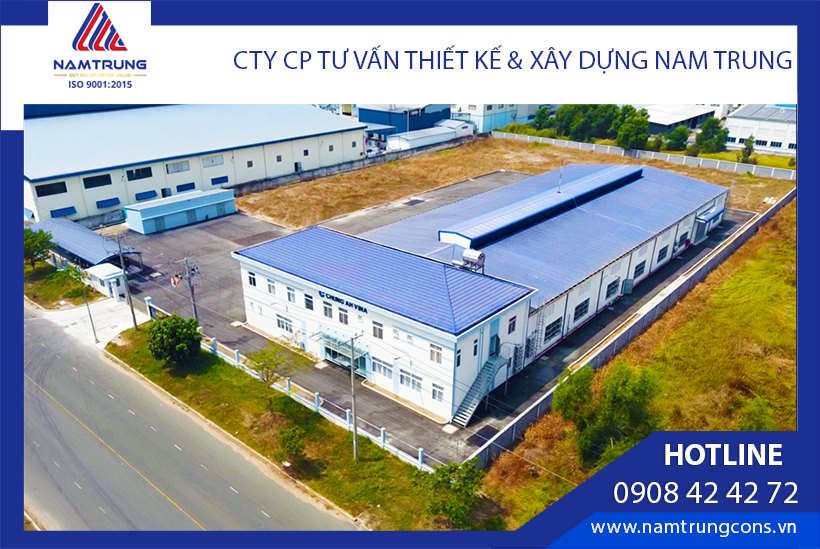
Industrial factory with integrated office – Chung Ah Vina (Completed in 2023)
Through this article, Nam Trung has introduced the most popular types of steel-structure industrial factories and their advantages.
👉 If you need consultation or construction of factories and warehouses, don’t hesitate to leave your information via the form below.
