


 Tiếng Việt
 한국어
한국어 中文 (中国)
 日本語
日本語Estimated reading time: 5 minutes
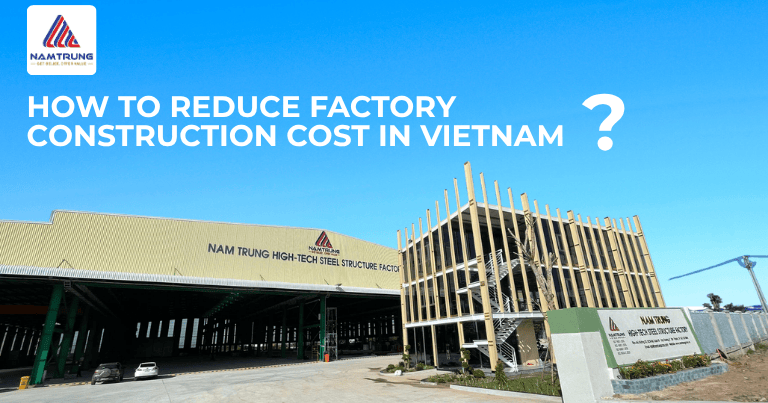
For international investors and business leaders, the strategic imperative to rreduce factory construction cost vietnam is the cornerstone of achieving a competitive return on investment and accelerating market entry in one of Asia’s most dynamic manufacturing hubs. Navigating this complex landscape requires a deep understanding of local material markets, labor dynamics, regulatory frameworks, and innovative construction methodologies.
This comprehensive guide will dissect the key cost drivers for 2026 and provide actionable, expert-backed strategies—from strategic site selection and value engineering to the adoption of pre-engineered steel building systems—that can lead to significant capital expenditure savings.
As a leading EPC contractor, Nam Trung Construction leverages its extensive experience in steel structure fabrication and industrial project delivery to help clients optimize every phase of their build, ensuring projects are not only cost-effective but also completed on time and to the highest quality standards.
Key content
- Understand the key drivers of factory construction costs in Vietnam for 2026, including material volatility and labor productivity.
- Implement proven strategies such as opting for pre-engineered steel buildings (PEBs) and strategic site selection.
- Leverage government incentives and streamlined approvals to reduce costs.
- Benefit from the EPC advantage with Nam Trung Construction for cost-certainty.
Understanding the Key Drivers of Factory Construction Costs in Vietnam (2026 Insights)
To effectively reduce factory construction cost in Vietnam, one must first understand the multifaceted factors influencing the budget. The Vietnamese construction landscape for 2026 is shaped by a confluence of local and global economic forces. While Vietnam remains a highly cost-competitive destination—with average monthly manufacturing operational expenses approximately 50% lower than in China—construction input costs are subject to volatility.
The primary cost drivers include fluctuating steel prices, which are sensitive to global commodity markets and regional supply chain dynamics. Labor costs, while still advantageous, are rising in key industrial regions, necessitating a focus on productivity and efficiency. Furthermore, logistics, permitting timelines, and the choice between traditional concrete and modern steel structures significantly impact the bottom line. Proactive management of these elements from the project’s inception is crucial for financial control and forms the foundation of any strategy to reduce factory construction cost in Vietnam.
Material Cost Volatility and Strategic Sourcing
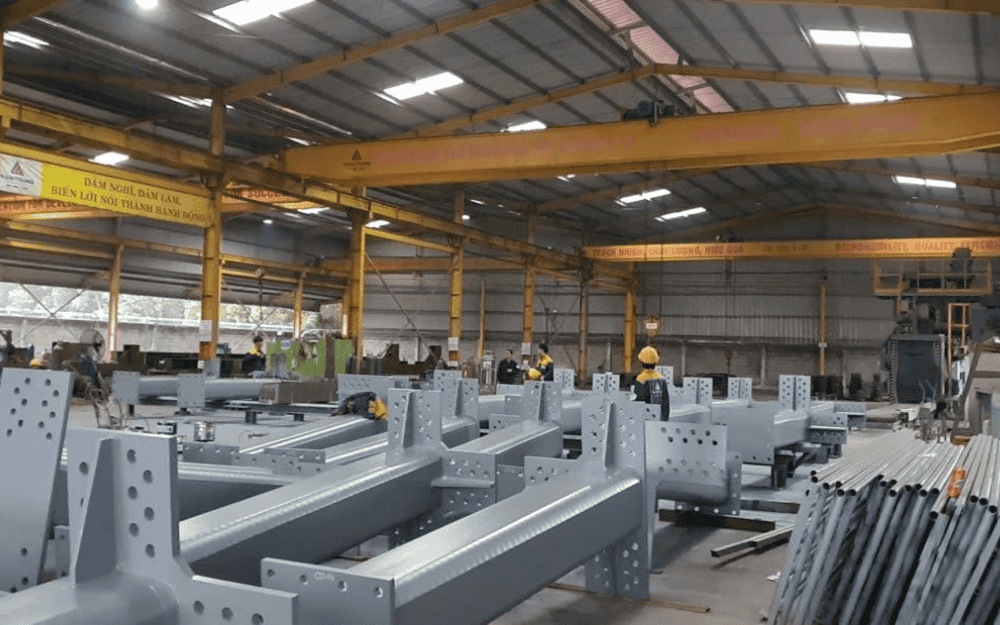
The price of construction materials, particularly structural steel, rebar, and cladding, is a major variable. Global events, trade policies, and domestic demand can cause significant price swings. To mitigate this risk:
- Early Procurement Lock-in: Partnering with an EPC contractor like Nam Trung Construction allows for early engagement with reliable suppliers and the potential to lock in material prices during favorable market conditions.
- Local vs. Imported Materials: Utilizing locally fabricated steel structures can drastically cut down on import duties, logistics costs, and lead times, contributing directly to efforts to reduce factory construction cost in Vietnam.
- Value Engineering in Design: Optimizing structural designs to use material more efficiently without compromising integrity or safety can yield substantial savings.
Labor Productivity and Skilled Workforce Management
Labor is not just about wage rates; it’s about output per hour. Inefficiencies can inflate schedules and costs.
- Specialized Contractors: Employing contractors with specific expertise in steel erection and pre-engineered building systems ensures faster, safer, and more accurate assembly, reducing on-site labor hours.
- Integrated Project Delivery: The EPC model streamlines communication between engineers, procurement teams, and construction managers, minimizing errors, rework, and delays that drive up labor costs.
Proven Strategies to Reduce Factory Construction Cost in Vietnam
Moving from understanding costs to actively managing them requires a toolkit of proven strategies. These approaches focus on smart planning, technological adoption, and methodological innovation.
Strategy 1: Opt for Pre-Engineered Steel Buildings (PEBs)
This is arguably the most impactful single decision an investor can make to reduce factory construction cost in Vietnam. Pre-engineered steel buildings are designed, fabricated, and shipped to the site as a complete kit of parts for rapid assembly.
- Speed of Construction: PEBs can reduce construction time by 30-50% compared to conventional methods. A shorter build time means lower financing costs, earlier operational revenue, and reduced exposure to weather-related delays.
- Design Efficiency: The building components are optimized in a factory setting for minimal material waste. The clear-span capabilities also create vast, column-free interior spaces, maximizing usable floor area for production lines.
- Future Flexibility: Expansion is straightforward with PEBs, allowing for cost-effective future growth by adding additional bays.
Strategy 2: Strategic Site Selection and Due Diligence
Location affects land cost, logistics, utility access, and labor availability. A cheap plot of land may incur huge costs in site preparation and infrastructure.
- Industrial Zones (IZs): While sometimes having a premium on land lease, established IZs offer developed infrastructure (roads, power, water, wastewater treatment), streamlined permitting, and often attractive tax incentives. The total cost-benefit analysis frequently favors IZs.
- Geotechnical Surveys: Conducting thorough soil tests before finalizing design prevents costly foundation redesigns or reinforcements later in the project.
- Logistics Access: Proximity to major ports, highways, and supplier hubs reduces transportation costs for both construction materials and future operational supply chains.
Strategy 3: Implement Value Engineering from Concept Stage
Value Engineering (VE) is a systematic method to improve the “value” of a project by examining its functions. Value is defined as the ratio of function to cost.
- Early Contractor Involvement: Bringing your EPC partner into the design phase allows for constructability reviews. They can suggest alternative materials, structural systems, or construction sequences that achieve the same performance for lower cost.
- Life-Cycle Cost Analysis: Don’t just focus on upfront capital expenditure (CAPEX). Consider operational expenses (OPEX). A slightly higher initial investment in superior insulation or energy-efficient roofing can lead to dramatic savings in factory cooling costs over the building’s lifetime.
Strategy 4: Leverage Government Incentives and Streamlined Approvals
The Vietnamese government offers various incentives to attract manufacturing investment, particularly in high-tech, supporting industries, and economically disadvantaged regions.
- Corporate Income Tax (CIT) Holidays: Projects in encouraged sectors or locations may qualify for a 0% tax rate for the first four years, followed by a 50% reduction for the next nine years.
- Import Duty Exemptions: Machinery, equipment, and materials that cannot be produced domestically may be eligible for import duty exemptions.
- Expert Navigation: The legal and regulatory framework can be complex. Partnering with a seasoned local EPC firm ensures you identify and successfully apply for all eligible incentives, which indirectly helps reduce factory construction cost in Vietnam by improving the project’s overall financial model.
The Nam Trung Construction EPC Advantage: Delivering Cost-Certainty
At Nam Trung Construction, we translate these strategies into tangible results for our clients. Our integrated Engineering, Procurement, and Construction (EPC) model is specifically designed to control costs and mitigate risks for industrial projects.

Engineering Excellence: Our in-house engineering team specializes in optimizing steel structure designs for manufacturability and economy. We use advanced BIM (Building Information Modeling) software to identify and resolve clashes digitally before they become costly on-site issues.
Procurement Power: Through our established network of trusted material suppliers and steel fabrication partners, we secure competitive pricing and ensure material quality, providing a robust shield against market volatility.
Construction Expertise: Our seasoned project managers and construction crews are experts in the efficient erection of pre-engineered steel buildings. We emphasize safety, precision, and schedule adherence, ensuring your project is delivered on time and on budget.
Our turnkey approach means a single point of responsibility. From initial feasibility studies and detailed design through to procurement, construction, and handover, we manage the entire process. This seamless integration eliminates finger-pointing between separate contractors, reduces administrative overhead for the client, and is the most reliable pathway to reduce factory construction cost in Vietnam while guaranteeing quality.
Conclusion
Successfully navigating a factory construction project in Vietnam demands more than just finding the lowest bidder; it requires a strategic partnership focused on value optimization, risk mitigation, and intelligent execution. The core mission to reduce factory construction cost in Vietnam is achieved through a combination of innovative building systems like pre-engineered steel, meticulous planning, strategic sourcing, and leveraging local expertise and incentives.
By adopting the strategies outlined in this guide—from value engineering and smart site selection to embracing the efficiency of steel structures—investors can realistically target savings of 20-30% on their capital expenditure while building a facility that supports long-term operational efficiency and growth.
Ready to transform your industrial project vision into a cost-optimized reality? Contact the experts at Nam Trung Construction today for a detailed consultation. Let us provide you with a comprehensive feasibility study and a transparent EPC proposal tailored to your specific needs, ensuring your investment in Vietnam is built on a foundation of strength, efficiency, and exceptional value.
NAM TRUNG DESIGN & CONSTRUCTION CONSULTING JOINT STOCK COMPANY
A leading EPC contractor for civil, industrial, commercial, and infrastructure projects in Southeast Vietnam.
🏠 119 Le Loi, Phu My Ward, Ho Chi Minh City
☎ (+84) 908 90 42 72 / (+84) 908 42 42 72
✉ sales@namtrungcons.com
🌐 namtrungcons.vn / namtrungcons.com
Frequently Asked Questions (FAQ)
What are pre-engineered steel buildings (PEBs) and how do they reduce construction costs?
Pre-engineered steel buildings (PEBs) are structures where components are designed, fabricated, and assembled off-site in a factory, then shipped as a kit for rapid on-site erection. They reduce costs by minimizing construction time (30-50% faster), reducing material waste through optimized design, and offering flexibility for future expansion, which lowers financing costs and accelerates operational revenue.
How can value engineering help in reducing factory construction costs?
Value engineering is a systematic approach to improve project value by analyzing functions and costs. It involves early contractor involvement to suggest alternative materials, designs, or construction sequences that maintain performance at lower cost. This can include life-cycle cost analysis to balance upfront capital expenditure with long-term operational savings, such as from energy-efficient designs.
What government incentives are available for factory construction in Vietnam?
Vietnam offers incentives like Corporate Income Tax (CIT) holidays (e.g., 0% tax for first four years, 50% reduction for next nine years) and import duty exemptions for machinery and materials not produced domestically. These are often available for projects in encouraged sectors or specific industrial zones, and partnering with a local EPC contractor can help navigate and apply for these incentives.
Why is site selection important for cost reduction?
Strategic site selection affects land cost, logistics, utility access, and labor availability. Choosing locations like established industrial zones may have higher lease costs but offer developed infrastructure, streamlined permitting, and tax incentives, reducing overall expenses for site preparation, transportation, and long-term operations.
How does Nam Trung Construction ensure cost-certainty in projects?
Nam Trung Construction ensures cost-certainty through its integrated EPC model, which includes engineering excellence with BIM technology, procurement power from trusted suppliers, and construction expertise in steel erection. This turnkey approach provides a single point of responsibility, minimizing risks, delays, and cost overruns from design to handover.
